The Wine Routes of Europe · Route 04
Tuscany
The Holy Trinity — Chianti Classico, Brunello & the Super Tuscans
The Route
The Holy Trinity — Chianti Classico, Brunello & the Super Tuscans
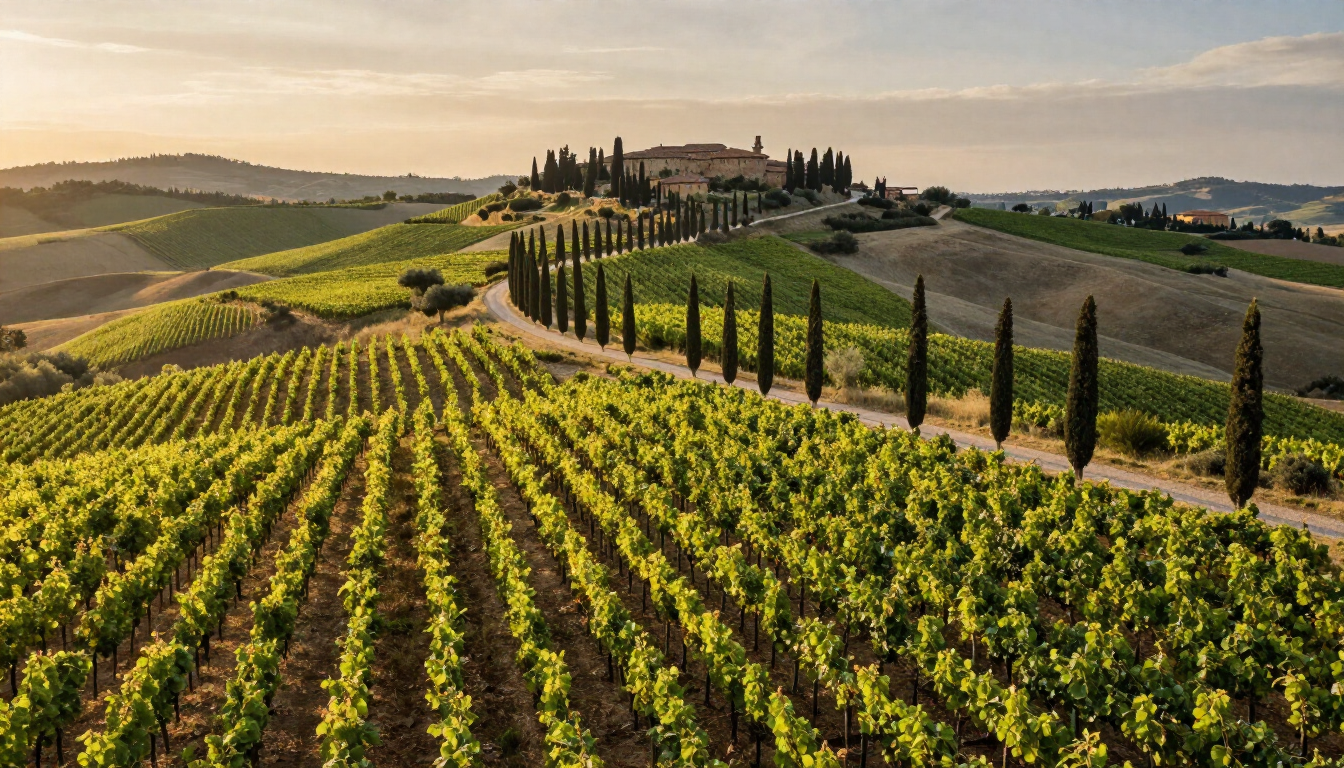
Three entirely different faces of one grape in a single journey: the elegance of Chianti Classico, the power and patience of Brunello, and the coastal rebels that broke the rules and became among the most expensive wines in the world.
A History in the Glass
Tuscany, across the centuries.
The Etruscans were making wine in these hills seven centuries before Christ, and doing it well enough to export north into Gaul — Etruscan amphorae have been dug up across France. Rome inherited the vineyards and the trade; the monasteries and the medieval city-states inherited them from Rome. By the Middle Ages, Florentine merchants were selling Tuscan wine across Europe and forming guilds to protect it.
In 1716 the Grand Duke of Tuscany did something extraordinary: he issued an edict legally defining the boundaries of Chianti and three other wine zones, and set up a body to police them. It is among the first appellation systems anywhere in the world — nearly two hundred years before France formalised its own. The black rooster that still marks the zone comes from a medieval legend about how Florence and Siena settled their border with a horse race at cockcrow.
The modern chapters are more recent than most guests expect. Brunello was essentially invented in the late nineteenth century by one estate that decided to bottle Sangiovese alone and age it for years — a heresy at the time. Then in the 1970s a handful of producers near the coast planted French varieties and ignored the rulebook entirely; the law forced them to label the results as ordinary table wine. Those 'table wines' became the Super Tuscans, and within a decade the rules had been rewritten around them.
Sommelier Notes
Tasting Sangiovese up the ladder — Chianti Classico, then Brunello, then a coastal Super Tuscan — in three cellars across one journey is the cleanest introduction to Italian wine I know. The grape stays constant; the argument changes completely.
Head Sommelier — Tuscan cellar programme
The 1716 edict that delimited Chianti is older than almost any appellation law in Europe. Walking the same boundaries the Grand Duke drew, glass in hand, gives the region a weight no brochure can.
Wine Director — Private client travel
Interesting Facts
- ◈
In 1716 the Grand Duke of Tuscany legally delimited Chianti and three other zones — among the world's earliest appellation systems.
- ◈
The black rooster emblem of Chianti Classico comes from a medieval boundary contest between Florence and Siena, settled by a horse race at cockcrow.
- ◈
The Etruscans exported Tuscan wine into France in the seventh century BC.
- ◈
Brunello was created in the late nineteenth century by isolating Sangiovese and ageing it far longer than anyone thought sensible.
Things That Make This Region Extraordinary
Six reasons this route is unlike any other.
In 1716 the Grand Duke of Tuscany legally delimited Chianti and three other zones — among the world's earliest appellation systems.
The black rooster emblem of Chianti Classico comes from a medieval boundary contest between Florence and Siena, settled by a horse race at cockcrow.
The Etruscans exported Tuscan wine into France in the seventh century BC.
Brunello was created in the late nineteenth century by isolating Sangiovese and ageing it far longer than anyone thought sensible.
The Super Tuscans were legally classified as humble table wine because they broke the appellation rules — then became some of Italy's most expensive bottles.
Sangiovese takes its name from sanguis Jovis — the blood of Jupiter.
In the Glass
What you will be drinking.
One grape, three arguments. Bright, structured and savoury in the classic heartland; deep, tannic and built for decades further south; and on the coast, Sangiovese joined by Cabernet and Merlot in wines that answer Bordeaux in a Mediterranean accent.
Grapes
Sangiovese
Character
Hill towns + icons
The Super Tuscans were legally table wine because they broke the rules — then became Italy's most expensive bottles. Telling that story where it happened, with the wines in front of you, is the moment our collectors commit.
Cellar Master — Bolgheri vertical tasting
The Journey
How the days unfold.
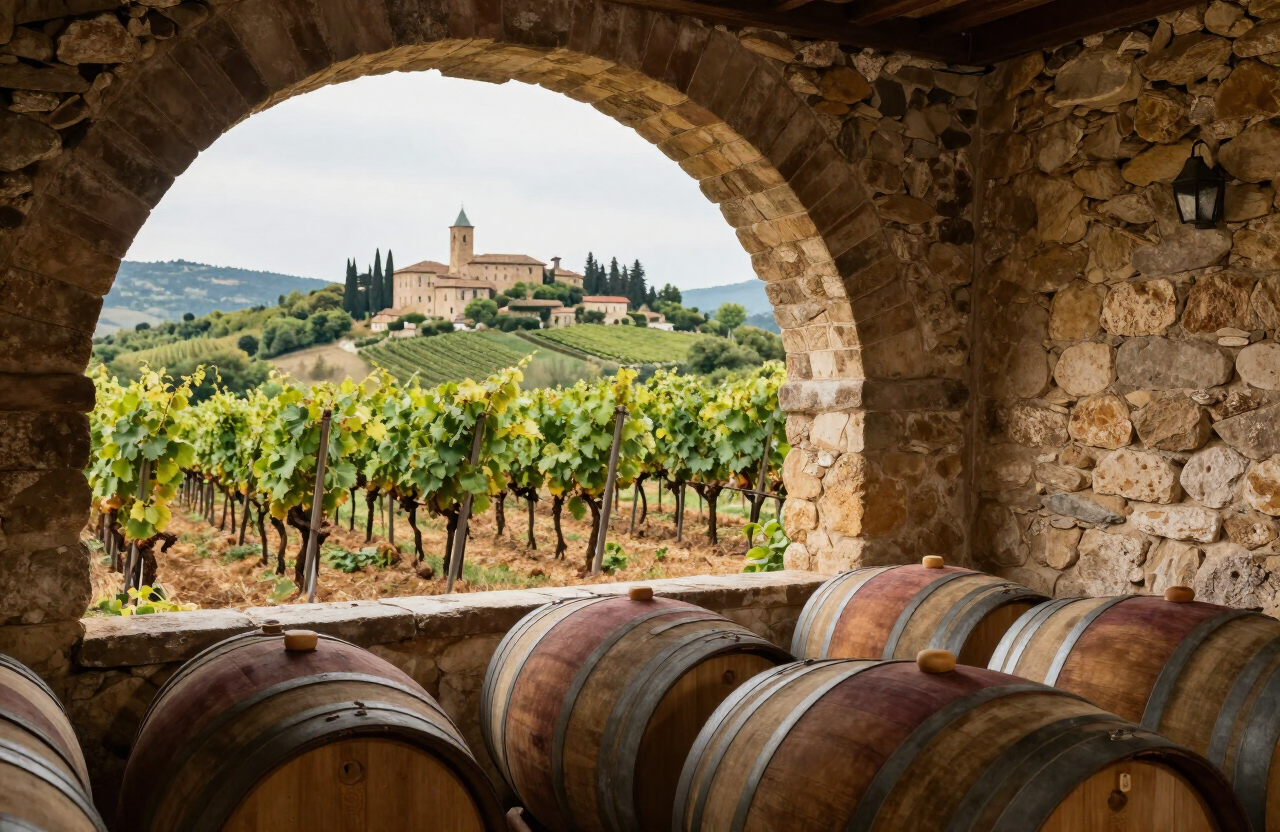
Slow and scenic by design — two visits a day, never three, because Tuscan tastings and estate lunches run long and that is the point. Cellars carved into rock beneath hill towns, a walk through a Renaissance village, olive oil straight from the mill, and a long table looking over the vines.
Best suited to
Classic first-time wine travel
Duration
6 days / 5 nights
When to go
May–Jun · Sep–Oct
More to know
Further facts from the route.
The Super Tuscans were legally classified as humble table wine because they broke the appellation rules — then became some of Italy's most expensive bottles.
Sangiovese takes its name from sanguis Jovis — the blood of Jupiter.
Continue exploring
The other nine routes across Europe.
Begin here
Your Tuscany journey, designed privately.
Tell us the route, the group and the season. We return a complete private itinerary within 48 hours.