The Wine Routes of Europe · Route 02
Serbia
Sacred Vines — Monastery Heritage & Native Grapes
The Route
Sacred Vines — Monastery Heritage & Native Grapes
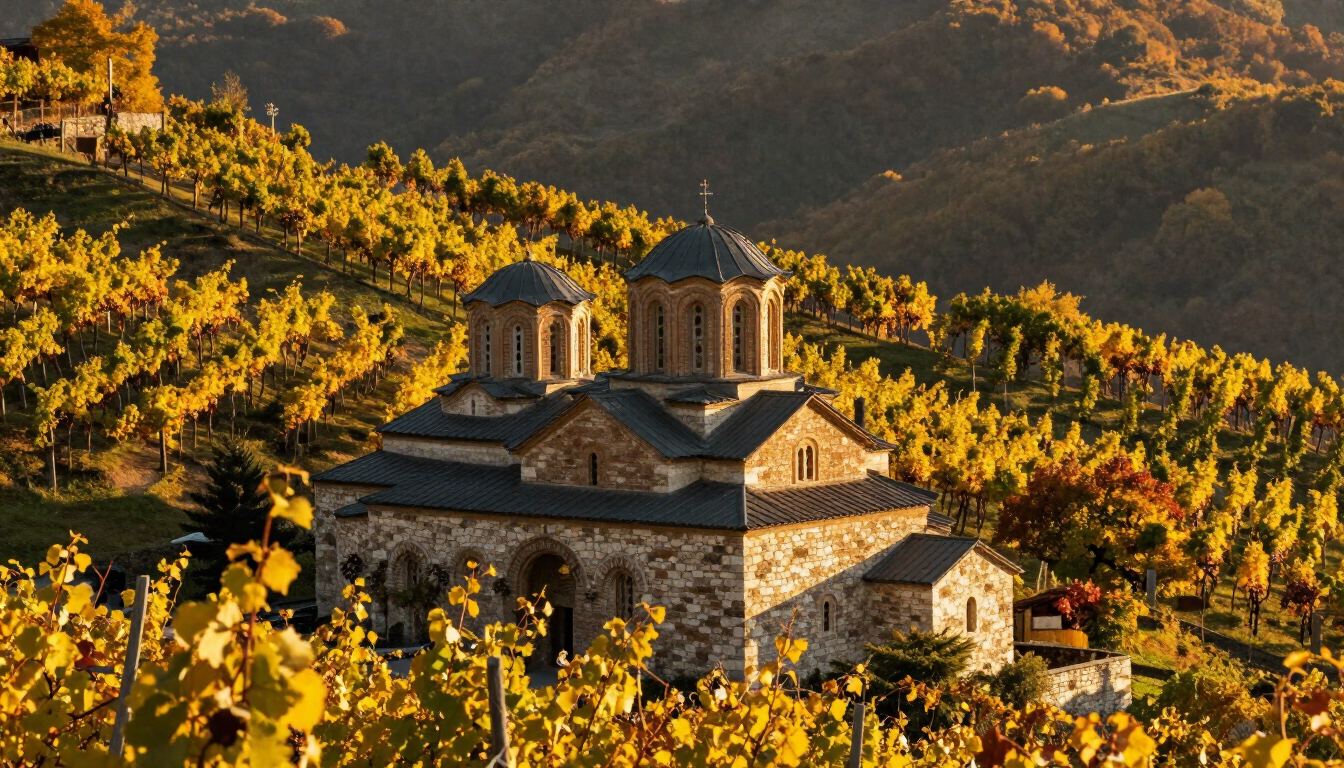
A rare, tangible story: winemaking preserved inside Orthodox monasteries through centuries when the state itself had ceased to exist — paired with native grapes the Western market is only beginning to discover.
A History in the Glass
Serbia, across the centuries.
The Romans took this region seriously enough that a third-century emperor born here is credited with restoring the right to plant vines across the Balkan provinces, reversing an imperial edict that had torn them out. Vineyards spread along the Danube and into the hills, and the practice never entirely stopped afterwards — which is the whole point of this route.
In the medieval Serbian kingdom, wine was a matter of state and faith at once. Rulers endowed monasteries with vineyards as acts of devotion; the great foundations of the Nemanjić dynasty were built with cellars beneath them, and wine was written into the charters. When the medieval state fell to the Ottomans in the fifteenth century, those monasteries became the vessel that carried viticulture forward — quietly, continuously, for liturgical use, through five hundred years in which a Muslim empire governed the land.
The twentieth century was less kind than the Ottomans: phylloxera, two world wars, and then decades of state-run bulk production that prized volume over identity and let the native varieties slide toward extinction. The revival began in earnest after 2000, when small private producers went looking for the old grapes — and found that the most Serbian of them all had survived, mostly in field blends and monastery plots. Today that grape anchors a new generation of serious wine.
Sommelier Notes
Prokupac in every register, from bright and juicy to structured and age-worthy, tasted in the cellars where it was nearly lost — this is the most under-discovered red story in Europe right now.
Head Sommelier — Balkan cellar programme
Tamjanika, whose name comes from the word for incense, is perfumed and unfamiliar in the best way. Our guests had never heard of it; now they ask for it by name.
Wine Director — Private client travel
Interesting Facts
- ◈
A Roman emperor born in what is now Serbia is credited with restoring vine-planting rights to the Balkan provinces in the third century.
- ◈
Under Ottoman rule, Orthodox monasteries kept viticulture alive for liturgical use — an unbroken thread of five centuries.
- ◈
The hills north of Belgrade hold more than fifteen Orthodox monasteries scattered among the vineyards, most founded between the fifteenth and eighteenth centuries.
- ◈
Bermet, a spiced dessert wine from those same hills, was served at the Habsburg court and is said to have appeared on the Titanic's wine list.
Things That Make This Region Extraordinary
Six reasons this route is unlike any other.
A Roman emperor born in what is now Serbia is credited with restoring vine-planting rights to the Balkan provinces in the third century.
Under Ottoman rule, Orthodox monasteries kept viticulture alive for liturgical use — an unbroken thread of five centuries.
The hills north of Belgrade hold more than fifteen Orthodox monasteries scattered among the vineyards, most founded between the fifteenth and eighteenth centuries.
Bermet, a spiced dessert wine from those same hills, was served at the Habsburg court and is said to have appeared on the Titanic's wine list.
Prokupac, Serbia's historic native red, is the symbol of the country's modern revival — and was nearly lost to industrial replanting.
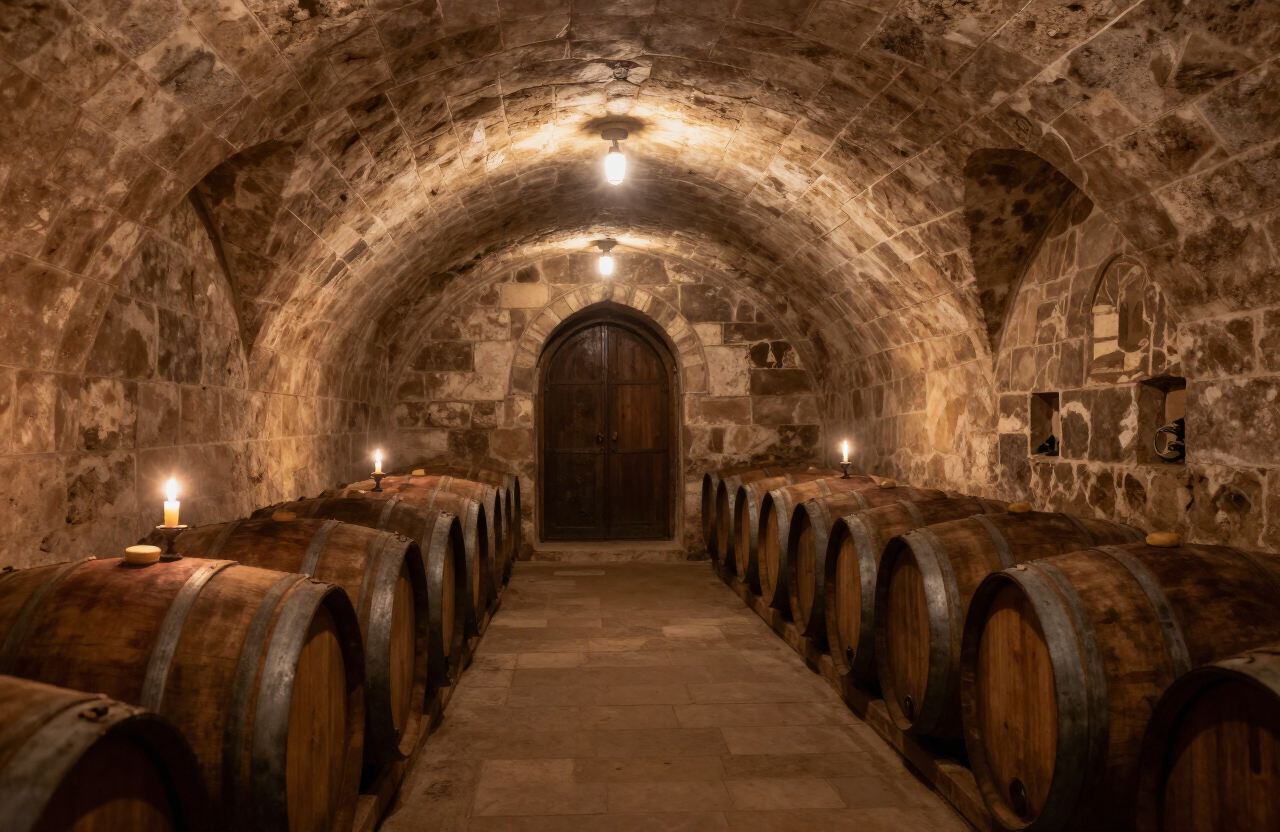
One monastery on the route works two cellars side by side: a fifteenth-century one where wine still ages in century-old oak, and a modern gravity-flow winery a few metres away.
In the Glass
What you will be drinking.
Prokupac in every register — from bright and juicy to structured and age-worthy — alongside aromatic Tamjanika, whose name comes from the word for incense. The reds are food wines with genuine grip; the whites are perfumed and unfamiliar in the best way.
Grapes
Prokupac + Tamjanika
Character
Monastery heritage
A fifteenth-century monastery where the monks themselves lead the tasting, beside a modern gravity-flow winery a few metres away — no other route carries this weight of continuity.
Cellar Master — Monastery heritage tasting
The Journey
How the days unfold.
The route moves from the capital into the monastery hills, south into the spiritual home of the native red, and finally over the mountains to a fifteenth-century monastery built on fourth-century foundations, where the monks themselves lead the tasting. It is a wine journey that is also, unmistakably, a pilgrimage.
Best suited to
Cultural discovery groups
Duration
7 days / 6 nights
When to go
May–Jun · late Sep–Oct
More to know
Further facts from the route.
Prokupac, Serbia's historic native red, is the symbol of the country's modern revival — and was nearly lost to industrial replanting.
One monastery on the route works two cellars side by side: a fifteenth-century one where wine still ages in century-old oak, and a modern gravity-flow winery a few metres away.
Continue exploring
The other nine routes across Europe.
Begin here
Your Serbia journey, designed privately.
Tell us the route, the group and the season. We return a complete private itinerary within 48 hours.