The Wine Routes of Europe · Route 05
Burgundy
The Route des Grands Crus — Pinot Noir & Chardonnay at the Summit
The Route
The Route des Grands Crus — Pinot Noir & Chardonnay at the Summit
The connoisseur's holy ground — the most terroir-obsessed region on earth, where a stone wall separates a village wine from a grand cru worth ten times more, and tasting up that ladder in one sitting is a masterclass no other region delivers so purely.
A History in the Glass
Burgundy, across the centuries.
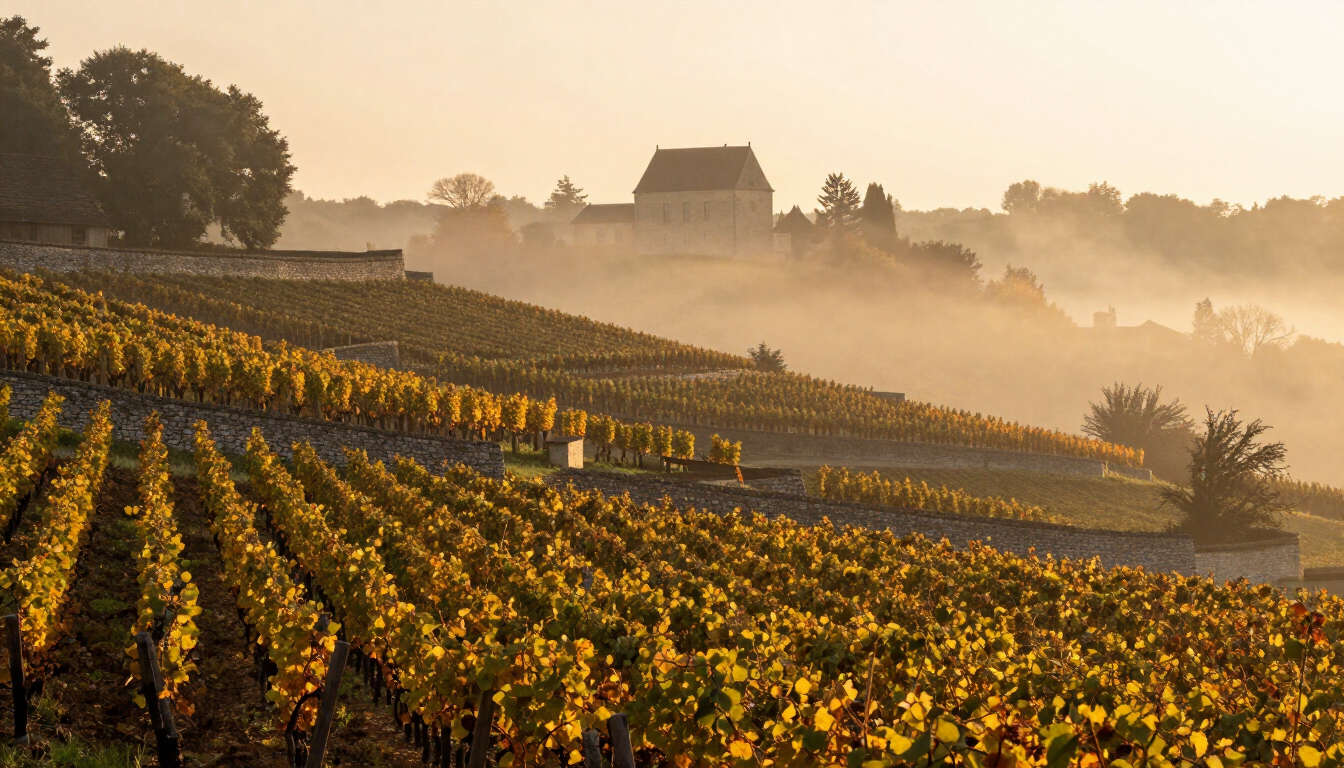
Burgundy's map was drawn by monks. From the sixth century onward, Benedictine and then Cistercian communities accumulated vineyards through donation and worked them for a thousand years — and because they stayed in one place across generations, they could do something no merchant could: taste the same slope year after year and notice that this parcel always gave more than the one beside it. Over centuries they walled those parcels off. The climats of the Côte d'Or are essentially a monastic research project, still legible in stone.
The dukes of Burgundy made it political. In 1395 one of them banned Gamay from the Côte outright, calling it disloyal and harmful, and reserved the great slope for Pinot Noir — an act of quality control four hundred years before appellation law. A few decades later, a chancellor and his wife founded a charity hospital in Beaune, funded by donated vineyards; its glazed-tile Gothic roof still stands, and its wines are still auctioned each November for charity, nearly six centuries on.
Then the French Revolution broke up the church estates, and Napoleonic inheritance law finished the job — dividing and re-dividing vineyards among heirs for two centuries. The result is Burgundy's defining peculiarity: a single grand cru vineyard of a few hectares may have dozens of separate owners, each making their own wine from their own rows. Nowhere else does so much depend on who, precisely, made it.
Sommelier Notes
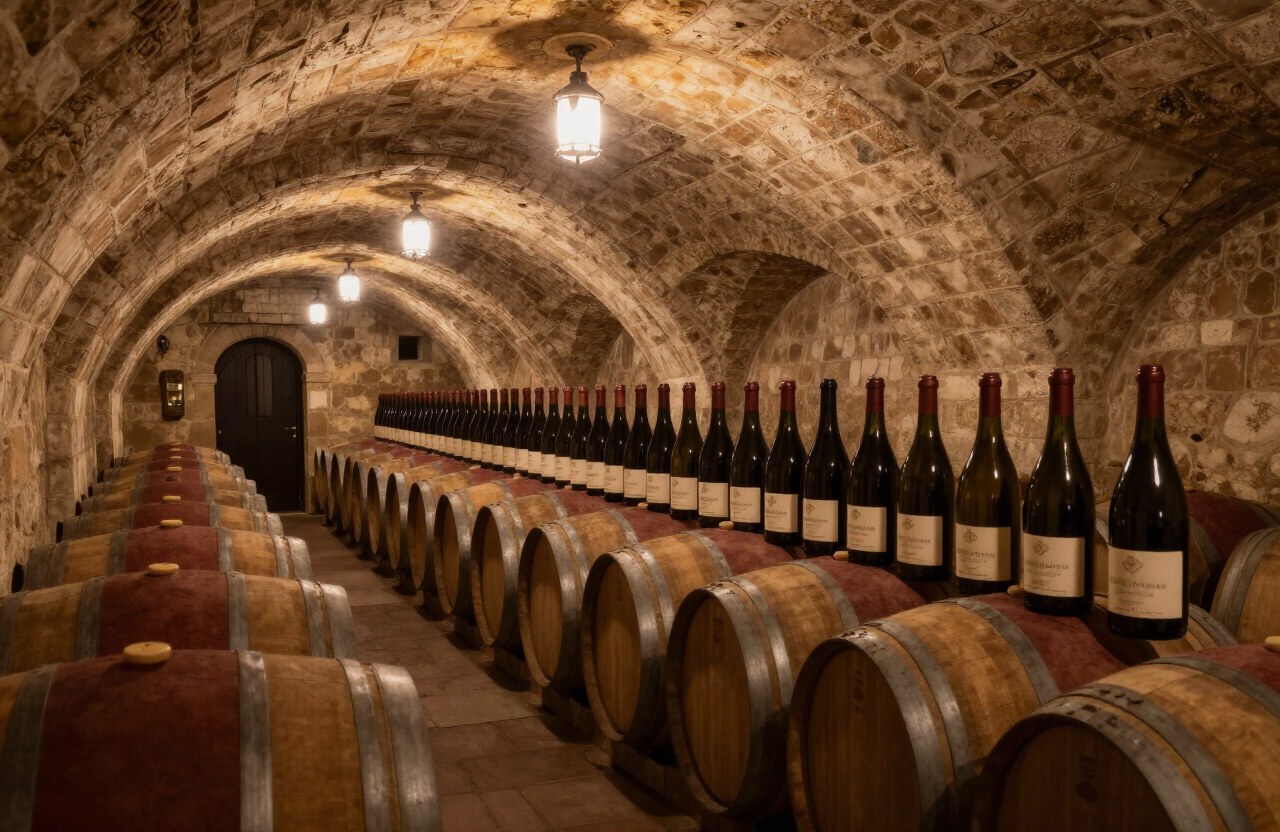
Two wines from either side of the same stone wall can differ tenfold in price — and taste it. Tasting that difference with the grower, in the vaulted cellar where both were made, is the education collectors cross the world for.
Head Sommelier — Grand cru cellar programme
The climats are a monastic research project a thousand years old, still legible in stone. Walking the Côte from Gevrey to Montrachet, parcel by parcel, is the closest wine gets to reading a map drawn by hand in the Middle Ages.
Wine Director — Private client travel
Interesting Facts
- ◈
The vineyard boundaries of the Côte d'Or were mapped by monks over roughly a thousand years of continuous observation.
- ◈
In 1395 the Duke of Burgundy banned Gamay from the great slope, reserving it for Pinot Noir — an early act of quality legislation.
- ◈
The climats of Burgundy have been UNESCO World Heritage since 2015; the mosaic of walled parcels is itself the monument.
- ◈
Napoleonic inheritance law fragmented the vineyards so thoroughly that one small grand cru can have dozens of owners.
Things That Make This Region Extraordinary
Six reasons this route is unlike any other.
The vineyard boundaries of the Côte d'Or were mapped by monks over roughly a thousand years of continuous observation.
In 1395 the Duke of Burgundy banned Gamay from the great slope, reserving it for Pinot Noir — an early act of quality legislation.
The climats of Burgundy have been UNESCO World Heritage since 2015; the mosaic of walled parcels is itself the monument.
Napoleonic inheritance law fragmented the vineyards so thoroughly that one small grand cru can have dozens of owners.
A charity hospital founded in Beaune in 1443 still funds itself through a famous November wine auction.
Two wines from either side of the same stone wall can differ tenfold in price — and taste it.
In the Glass
What you will be drinking.
Pinot Noir and Chardonnay, and almost nothing else — but tasted up the ladder from village to premier cru to grand cru with the same grower, in one sitting. That comparison is the entire education, and it is why collectors come.
Grapes
Pinot Noir + Chardonnay
Character
Terroir at its purest
Napoleonic inheritance shattered these vineyards into dozens of owners per grand cru. Knowing precisely whose rows you are drinking — and visiting them — is the whole point of Burgundy, and the reason no other region rewards the journey so completely.
Cellar Master — Côte de Nuits vertical
The Journey
How the days unfold.
Based in the walled wine capital, working the great slope village by village. Historic vaulted cellars, a fourteenth-century cellar beneath a hill, family growers who welcome trade, and — as a northern add-on — a completely different, steely Chardonnay grown on limestone full of fossil oysters.
Best suited to
Collectors and sommeliers
Duration
6 days / 5 nights
When to go
May–Jun · Sep
More to know
Further facts from the route.
A charity hospital founded in Beaune in 1443 still funds itself through a famous November wine auction.
Two wines from either side of the same stone wall can differ tenfold in price — and taste it.
Continue exploring
The other nine routes across Europe.
Begin here
Your Burgundy journey, designed privately.
Tell us the route, the group and the season. We return a complete private itinerary within 48 hours.