The Wine Routes of Europe · Route 03
Champagne + Alsace
Bubbles & Fairytales — Two Faces of Eastern France
The Route
Bubbles & Fairytales — Two Faces of Eastern France
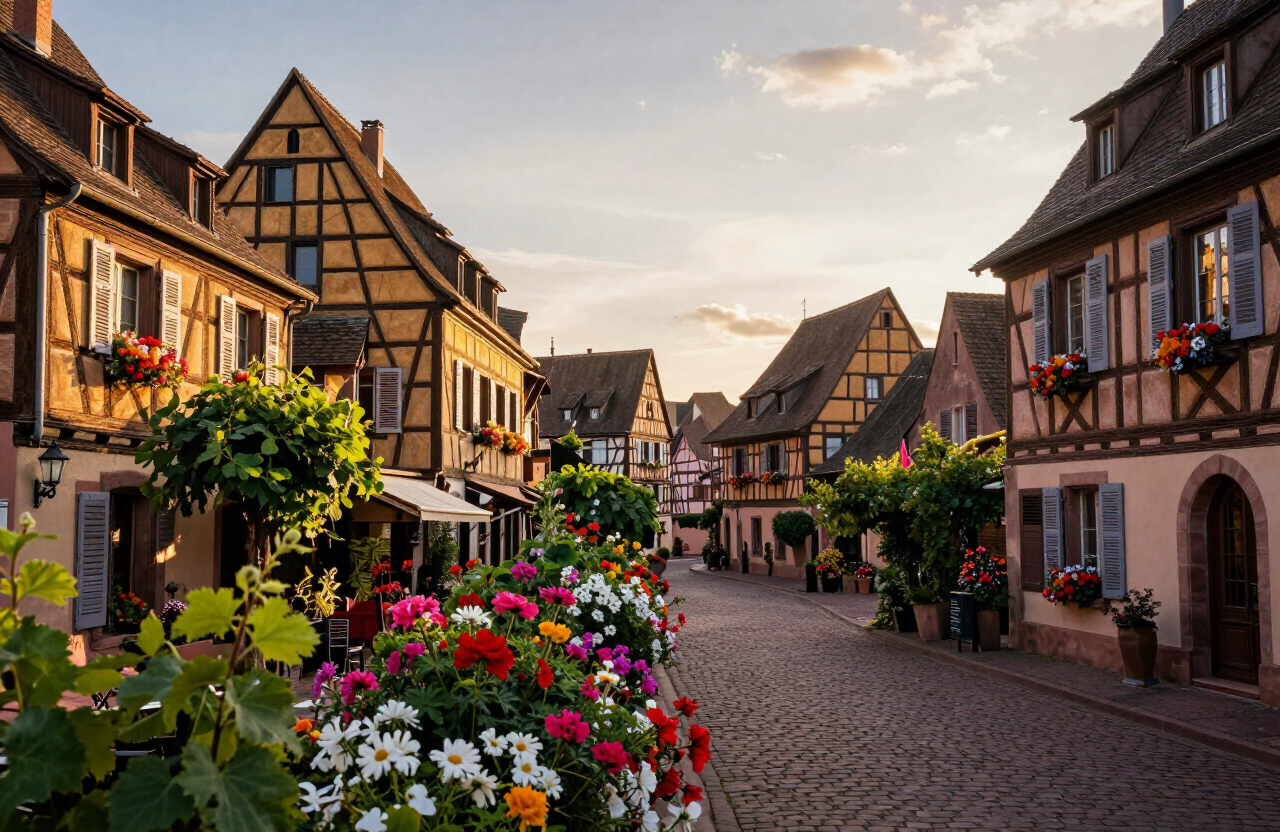
Two registers of luxury in one journey. Champagne brings glamour, ceremony and chalk cellars thirty metres underground; Alsace answers with half-timbered villages, vineyards that begin at the edge of the square, and some of the world's greatest white wine.
A History in the Glass
Champagne + Alsace, across the centuries.
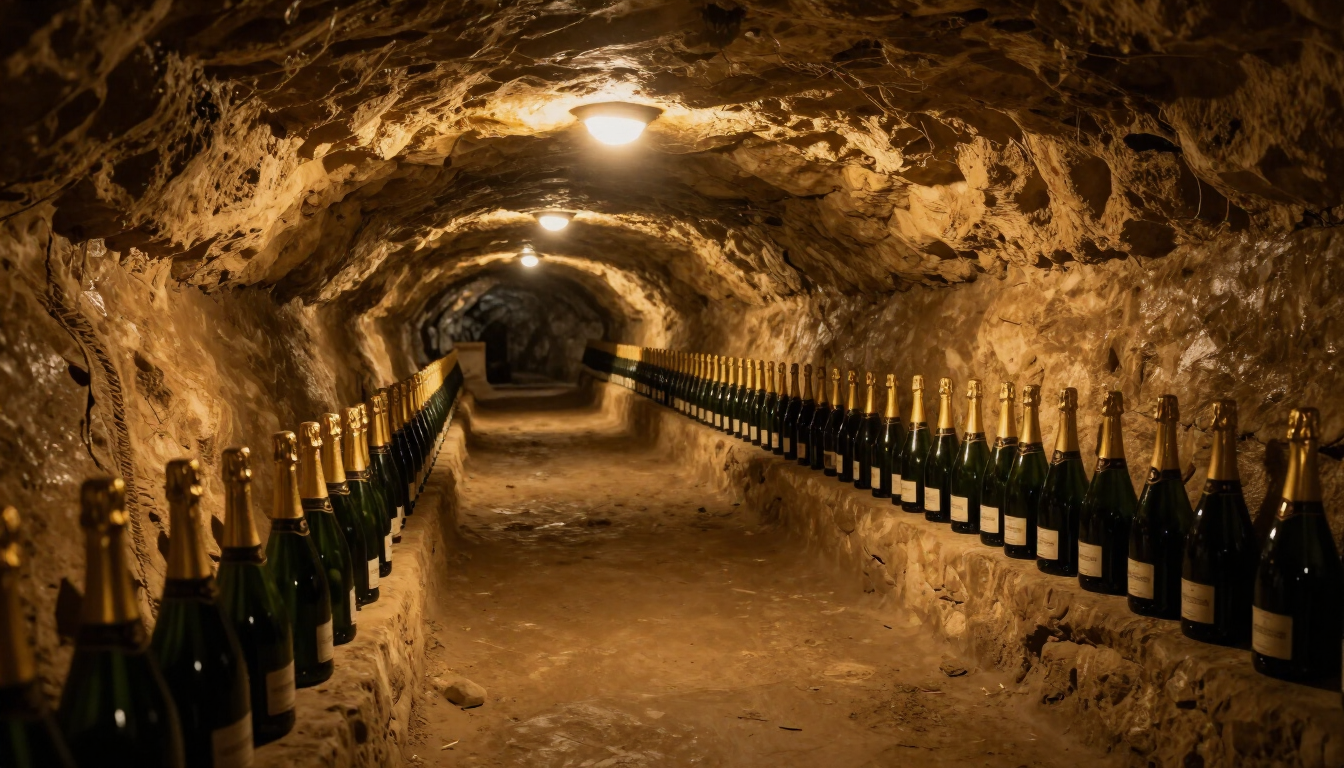
Champagne's cellars are older than champagne itself. The Romans quarried chalk here, cutting vast pyramidal shafts called crayères to build their city; nearly two thousand years later those same voids became the coldest, stillest, most perfectly humid cellars in Europe — now UNESCO World Heritage, and still full of bottles. Above them stands the cathedral where the kings of France were crowned, which is precisely why the region's wine acquired its association with ceremony.
The sparkle, famously, began as a defect. Cold Champagne winters halted fermentation early; spring restarted it in the bottle, and the resulting pressure burst the glass — cellar workers wore masks. For decades the region tried to eliminate the bubbles. The seventeenth-century Benedictine cellar master at the abbey of Hautvillers, remembered now as the father of champagne, spent much of his career trying to make still wine better and blending across villages to do it. The blend, not the bubble, was his true invention. Only when English glassmakers produced bottles strong enough to hold the pressure did the fault become the point.
Alsace has a stranger history: the same vineyards, four changes of nationality between 1870 and 1945, and a wine culture that absorbed both traditions. It emerged with something no other French region has — labels that name the grape rather than the place, a Germanic clarity of variety wrapped in French sensibility. Its Route des Vins, opened in 1953, is among the oldest signposted wine roads in the world.
Sommelier Notes
The chalk cellars descend thirty metres — Gallo-Roman quarries, UNESCO World Heritage, and still full of bottles. Standing among them is the only way to understand why champagne is champagne.
Head Sommelier — Prestige cuvée programme
The pivot from prestige champagne to dry Riesling of extraordinary purity, in a single journey, is the most elegant two-register itinerary we offer. Incentive groups adore it.
Wine Director — Corporate incentive travel
Interesting Facts
- ◈
Champagne's chalk cellars descend around thirty metres and were originally Gallo-Roman quarries; the network is UNESCO World Heritage.
- ◈
Sparkling wine began as a flaw the region actively tried to remove — early bottles exploded so often that cellar workers wore protective masks.
- ◈
The famous Benedictine cellar master of Hautvillers is best remembered today for perfecting blending across villages, not for inventing bubbles.
- ◈
Champagne only became viable at scale once English glassmakers developed bottles strong enough to contain the pressure.
Things That Make This Region Extraordinary
Six reasons this route is unlike any other.
Champagne's chalk cellars descend around thirty metres and were originally Gallo-Roman quarries; the network is UNESCO World Heritage.
Sparkling wine began as a flaw the region actively tried to remove — early bottles exploded so often that cellar workers wore protective masks.
The famous Benedictine cellar master of Hautvillers is best remembered today for perfecting blending across villages, not for inventing bubbles.
Champagne only became viable at scale once English glassmakers developed bottles strong enough to contain the pressure.
Alsace changed nationality four times between 1870 and 1945 — its wine culture carries both French and German inheritance.
Alsace is the one French region that labels its wines primarily by grape variety, and its wine route, opened in 1953, is one of the world's oldest.
In the Glass
What you will be drinking.
Chardonnay under pressure — chalk, brioche, precision, and prestige cuvées that justify the reputation — then the pivot to dry Riesling of extraordinary purity, plus Gewürztraminer and Pinot Gris grown on some of the most complex geology in France.
Grapes
Chardonnay + Riesling
Character
Prestige + storybook
Alsace's Route des Vins, opened in 1953, is among the oldest signposted wine roads in the world — and the unhurried grower's lunch where the wine is the product is the whole point.
Cellar Master — Grand cru Riesling tasting
The Journey
How the days unfold.
Cellars first: the great houses, the cathedral, the deep chalk. Then a grower's kitchen table for the counterweight. An afternoon's transfer, and the register changes entirely — storybook villages, vineyards running up to the last house, and unhurried tastings where lunch runs long because that is the product.
Best suited to
Incentive and luxury groups
Duration
6 days / 5 nights
When to go
May–Jun · Sep · festive winter option
More to know
Further facts from the route.
Alsace changed nationality four times between 1870 and 1945 — its wine culture carries both French and German inheritance.
Alsace is the one French region that labels its wines primarily by grape variety, and its wine route, opened in 1953, is one of the world's oldest.
Continue exploring
The other nine routes across Europe.
Begin here
Your Champagne + Alsace journey, designed privately.
Tell us the route, the group and the season. We return a complete private itinerary within 48 hours.