The Wine Routes of Europe · Route 07
Bordeaux + Loire
Châteaux & the Long River — Classic France, Two Ways
The Route
Châteaux & the Long River — Classic France, Two Ways
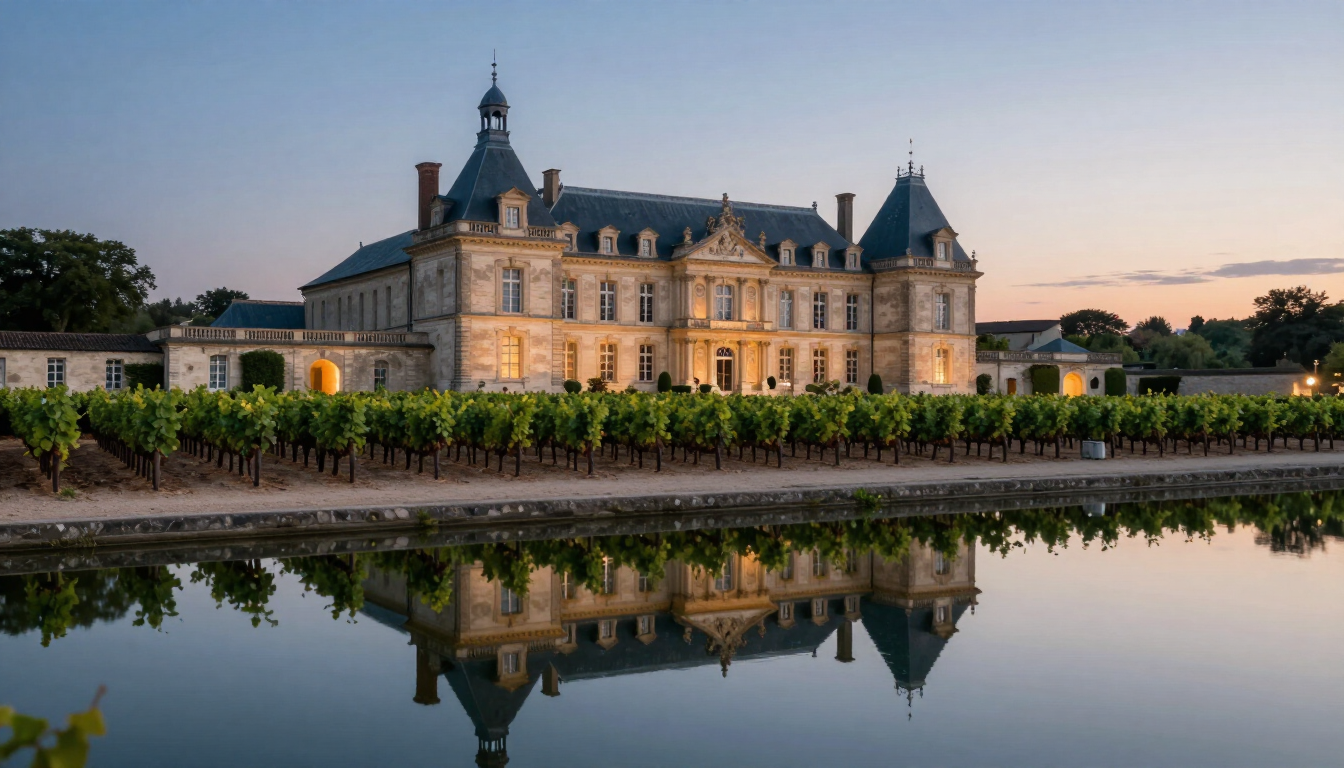
Bordeaux is the name every collector knows — grand châteaux, the 1855 classification, the world's benchmark for age-worthy reds. The Loire is its opposite and its perfect complement: a long river of astonishing variety, and some of the most beautiful châteaux in France.
A History in the Glass
Bordeaux + Loire, across the centuries.
Bordeaux owes its existence to two foreign interventions. In 1152 the heiress of Aquitaine married the man who would become King of England, and for the next three hundred years the region's wine flowed duty-light into England, where it was drunk young and pale and called claret — a trade that built the city. Then in the seventeenth century, Dutch engineers arrived and drained the marshes of the Médoc, exposing the deep gravel banks that produce Bordeaux's greatest wines. Without Dutch drainage, the Left Bank as we know it simply would not exist.
The famous classification was, by any standard, a rush job. For the Paris Universal Exposition of 1855, the emperor asked for a ranking of Bordeaux's wines; the brokers assembled one in a matter of weeks, using market prices as their guide. It was meant to be a snapshot. It is still, more than a century and a half later, essentially unchanged — the most durable marketing document in the history of wine.
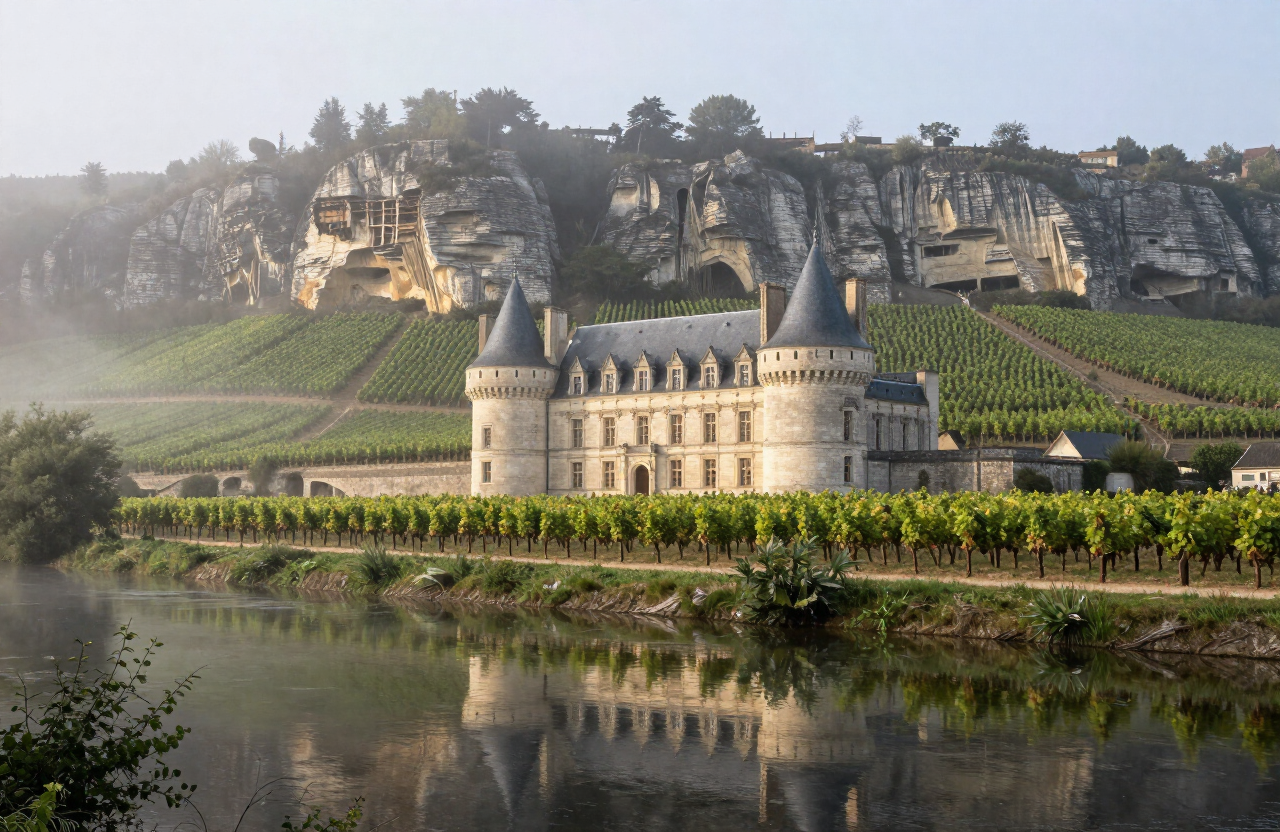
The Loire's history is royal rather than mercantile. The French court moved here in the Renaissance, and the kings and their financiers built the great châteaux along the valley — quarrying soft tuffeau limestone out of the hillsides to do it. The resulting caves became cellars, and remain so. Because the valley runs a thousand kilometres from the mountains to the Atlantic, no other French region produces such range: bone-dry to unctuously sweet, still to sparkling, crisp whites to fresh, food-friendly reds.
Sommelier Notes
The 1855 classification was a rush job for a world's fair, and it still governs the market. Tasting the classified growths on the gravel banks where they were made, then standing in the Médoc marshes the Dutch drained — the story becomes physical.
Head Sommelier — Classified growth programme
Sauternes at source is a revelation. Noble rot, autumn mists off the river, golden wine drunk where it was made — most guests have never truly understood it until that glass, and they remember it for years.
Wine Director — Private client travel
Interesting Facts
- ◈
Dutch engineers drained the marshes of the Médoc in the seventeenth century — Bordeaux's greatest vineyards would not exist without them.
- ◈
A royal marriage in 1152 placed Bordeaux under English rule for three centuries, creating the claret trade that built the city.
- ◈
The 1855 classification was assembled in a matter of weeks for a world's fair, based on market prices — and remains almost unchanged today.
- ◈
The Loire's cellars are the quarries that built its châteaux: soft tuffeau limestone cut out of the hillsides during the Renaissance.
Things That Make This Region Extraordinary
Six reasons this route is unlike any other.
Dutch engineers drained the marshes of the Médoc in the seventeenth century — Bordeaux's greatest vineyards would not exist without them.
A royal marriage in 1152 placed Bordeaux under English rule for three centuries, creating the claret trade that built the city.
The 1855 classification was assembled in a matter of weeks for a world's fair, based on market prices — and remains almost unchanged today.
The Loire's cellars are the quarries that built its châteaux: soft tuffeau limestone cut out of the hillsides during the Renaissance.
The Loire produces every style of wine there is — dry, off-dry, sweet, sparkling, red, white and rosé — often from the same cellar.
Sauternes' golden sweet wine depends on a fungus: noble rot, encouraged by autumn mists off the river.
In the Glass
What you will be drinking.
On one side, Cabernet- and Merlot-led blends built for decades, plus botrytised sweet wine most guests have never truly understood until they taste it at source. On the other, Chenin Blanc in every guise from steel-dry to honeyed, flinty Sauvignon from hilltop vineyards, and fresh, undervalued Cabernet Franc reds.
Grapes
Blends + Chenin + Cabernet Franc
Character
Châteaux + long river
The Loire's cellars are the quarries that built its châteaux. Tasting Chenin Blanc from tuffeau caves beneath a Renaissance rooftop, then Cabernet Franc by the river — no other region offers such range from a single cellar.
Cellar Master — Loire valley vertical
The Journey
How the days unfold.
Formal first — the elegant city, the classified estates, the gravel banks, a medieval village built above cellars carved from rock. Then north to the river, where the register softens: Renaissance châteaux among the vineyards, riverside tastings and a final sparkling cellar before departure.
Best suited to
Classic France with variety
Duration
7 days / 6 nights
When to go
Jun · Sep
More to know
Further facts from the route.
The Loire produces every style of wine there is — dry, off-dry, sweet, sparkling, red, white and rosé — often from the same cellar.
Sauternes' golden sweet wine depends on a fungus: noble rot, encouraged by autumn mists off the river.
Continue exploring
The other nine routes across Europe.
Begin here
Your Bordeaux + Loire journey, designed privately.
Tell us the route, the group and the season. We return a complete private itinerary within 48 hours.